NATIONAL LEAD POISONING PREVENTION WEEK
NATIONAL LEAD POISONING PREVENTION WEEK
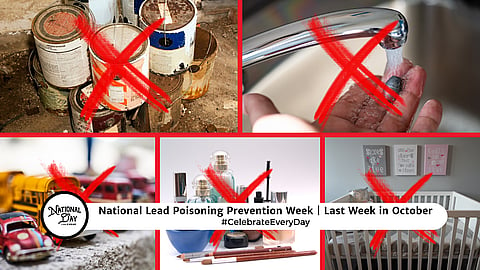
Every year during the last week of October, National Lead Poisoning Prevention Week raises awareness about lead poisoning. It’s also a day that focuses on helping individuals, organizations, and governments to work together to reduce childhood exposure to lead.
According to the Centers for Disease Control and Prevention (CDC) children in 4 million households are exposed to high levels of lead. When lead builds up in the body, it results in lead poisoning. Children under the age of 6 are especially vulnerable to lead poisoning. This is because their growing bodies absorb more lead than adults. Also, children may inadvertently put things that contain lead into their mouths.
Signs of lead poisoning in children include:
Developmental delays
Learning difficulties
Loss of appetite and weight loss
Feeling sluggish and fatigued
Seizures
Babies in the womb can also have lead poisoning. Babies that are exposed to lead before birth might be born too early or have a low birth weight. Adults can get lead poisoning, too. Symptoms of lead poisoning in adults include high blood pressure, joint muscle and pain, problems with memory or concentration, headaches, and mood disorders.
Lead poisoning occurs when children or adults are exposed to lead. Lead is found in batteries, pottery, roofing materials, soil, cosmetics, toys, and bullets. The United States banned lead-based paints in 1978. However, many people still live in older homes that were painted with lead-containing paint. It’s these people who are at the highest risk of lead poisoning. Families who live in homes with lead pipes are also at risk.
5 WAYS TO PARTICIPATE IN LEAD POISONING PREVENTION WEEK
Many health organizations across the country hold events throughout the week. These events include webinars, presentations, and seminars on lead poisoning prevention. To participate:
If you’re concerned about lead in your home, get your family tested for lead poisoning.
Learn about lead and its negative effects on one’s health.
Talk to health officials and policymakers about ways to prevent lead poisoning in your community.
Watch the documentary Lead Poisoning…The Perfect Predator.
Spread awareness for the week with #NationalLeadPoisoningPreventionWeek or #NLPPW
NATIONAL LEAD POISONING PREVENTION WEEK HISTORY
In 1999, the United States Senate designated the last week in October as National Childhood Lead Poisoning Prevention Week. The observance is more commonly known as National Lead Poisoning Prevention Week (NLPPW). The CDC, EPA, U.S. Department of Housing and Urban Development (HUD), and WHO coordinate events for NLPPW. Because of the success of the campaign in the U.S., the United Nations Environment Program (UNEP) and WHO created an International Lead Poisoning Prevention Week in late 2012.